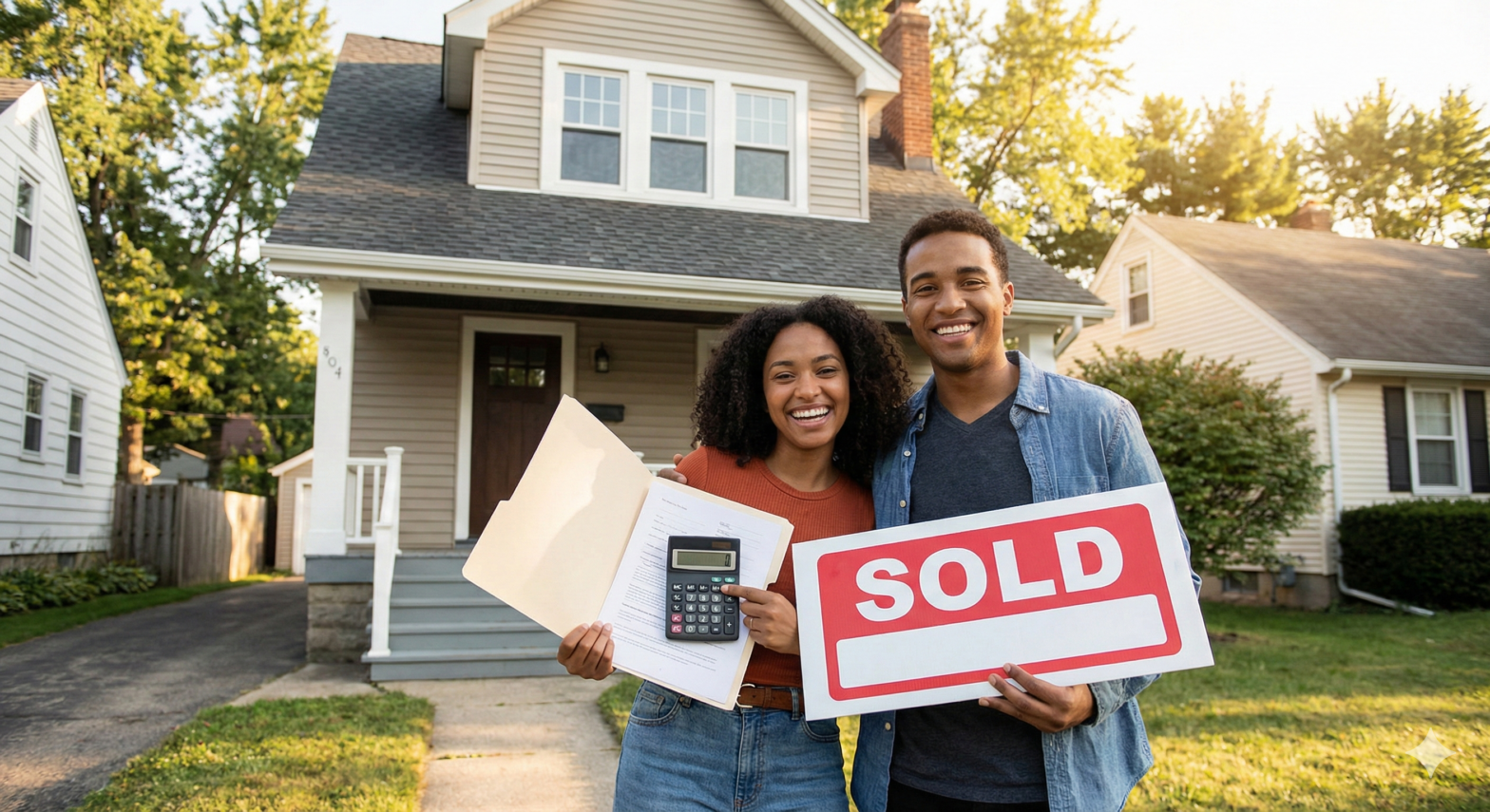
Get Pre-Approved, Not Just Pre-Qualified
Buying your first home is one of the most significant financial decisions you’ll ever make. The process can feel overwhelming, especially when you’re navigating offers, inspections, and financing for the first time. Here’s what you need to know before you submit that first offer.
Pre-qualification is a rough estimate based on self-reported financials. Pre-approval is a lender’s verified commitment. In a competitive market, sellers take pre-approved buyers far more seriously — and in some cases won’t consider offers without it. Get pre-approved before you start touring homes.
Understand What You Can Actually Afford
Your lender may approve you for more than you’re comfortable spending. Factor in property taxes, HOA fees, homeowner’s insurance, maintenance costs, and utilities — not just the mortgage payment. A good rule of thumb is to keep total housing costs under 28% of your gross monthly income.
Don’t Skip the Home Inspection
In a hot market, some buyers waive inspections to make their offer more attractive. This is a risk that rarely pays off. A professional home inspection can uncover structural issues, faulty wiring, plumbing problems, and more — issues that could cost tens of thousands of dollars after closing. Know what you’re buying.
Research the Neighborhood, Not Just the House
The home you can renovate. The neighborhood is fixed. Look at school district ratings, walkability scores, proximity to your workplace, nearby development plans, and recent crime statistics. Drive through the area at different times of day before making a decision.
Make a Competitive Offer Based on Data
Emotions run high when you find a home you love. Work with your agent to review comparable sales (comps) in the area before settling on your offer price. A data-driven offer protects you from overpaying and gives you a strong negotiating position.
Buying your first home doesn’t have to be stressful. The right preparation and the right team make all the difference.
The Danger of Overpricing
Pricing a home is part science, part strategy. Set the price too high and your listing stagnates. Drop it later and buyers wonder what’s wrong with the property. Set it too low and you leave money on the table. Getting it right from day one is one of the most important moves a seller can make.
Homes that sit on the market attract skepticism. Buyers and their agents notice days-on-market, and a listing that’s been sitting for 60+ days often triggers lowball offers. Studies consistently show that homes priced correctly sell faster and closer to — or above — asking price compared to homes that undergo price reductions.
What a Comparative Market Analysis Actually Tells You
A CMA (Comparative Market Analysis) looks at recently sold homes in your area that are similar in size, age, condition, and features. Your agent will pull comps within the last 90 days, typically within a half-mile to one-mile radius. This data establishes a realistic price range — not a ceiling, not a floor, a range.
Condition and Updates Move the Number
Within that range, your home’s condition matters. Fresh paint, updated kitchens and bathrooms, new flooring, and modern fixtures push you toward the top of the range. Deferred maintenance, dated finishes, and functional issues pull you down. Be honest about where your property sits.
Market Timing Affects Strategy
In a seller’s market with low inventory, pricing slightly below market can trigger multiple offers and drive the final sale price up. In a buyer’s market, you may need to price more aggressively from the start to stand out. Your agent should advise you based on current conditions, not general rules.
The Bottom Line
The first two weeks of a listing are when buyer interest is highest. Make them count by pricing your home accurately from the start. A well-priced home doesn’t just sell — it sells well.
When Renting Makes Sense
The rent vs. buy debate is one of the most common conversations in residential real estate — and the honest answer is: it depends entirely on your situation. Here’s a framework for thinking it through.
Renting isn’t throwing money away — it’s paying for flexibility and housing without the obligations of ownership. Renting is often the smarter move if you’re likely to relocate within the next two to three years, if you’re in a market where purchase prices are significantly inflated relative to rents, or if your financial situation (credit score, savings, income stability) isn’t yet optimized for a mortgage.
The price-to-rent ratio is a useful metric here. Divide the median home price in your target area by the annual median rent for a comparable property. A ratio under 15 generally favors buying. A ratio over 20 often favors renting. In many major markets today, that ratio sits well above 20.
When Buying Makes Sense
Buying builds equity over time. Each mortgage payment increases your ownership stake in an asset that historically appreciates in value. Buying also provides stability — fixed-rate mortgages lock in your payment for 15 or 30 years while rent prices continue to rise.
If you plan to stay in an area for five or more years, have a stable income, and can put down a solid down payment without depleting your emergency fund, buying typically wins out financially in the long run.
The Emotional Equation
Beyond the numbers, homeownership offers something renting doesn’t: permanence. You can renovate, paint, landscape, and make a space truly yours. For many people, that stability and freedom is worth a premium. For others who value mobility and minimal maintenance responsibility, renting provides a quality of life that ownership can’t match.
The Decision
Run the numbers for your specific market, your income, your timeline, and your priorities. There’s no universal right answer — only the right answer for you right now. A trusted real estate advisor can help you model both scenarios and make a decision you’ll feel confident about.